

Underwater Photography Course in Hurghada
Lerne Unterwasserfotografie von Menschen, die davon leben. Wir sind in erster Linie arbeitende Unterwasserfotografen und erst in zweiter Linie Tauchlehrer, und wir bringen dir die Dinge bei, die wirklich gute Fotos ausmachen: Tarierung, Licht, Geduld und wie du dich Meereslebewesen näherst, damit sie bleiben. Bevor du auch nur einen Euro für Ausrüstung ausgibst, helfen wir dir, die richtige Kamera für dein Budget zu wählen.
2 Tage, 4 Tauchgänge · ab €250 pro Kurs
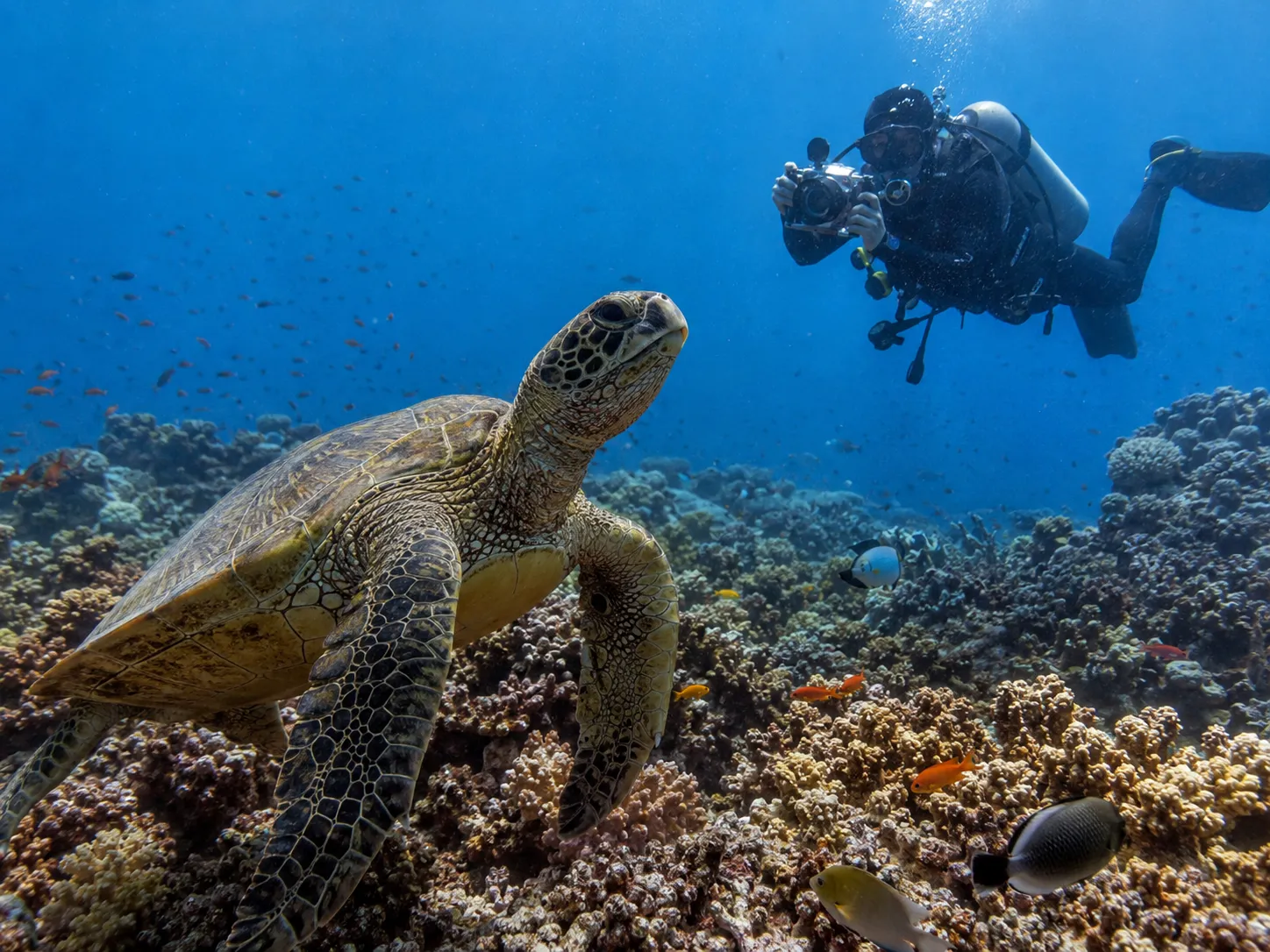
Unterrichtet von Fotografen, nicht nur von Tauchlehrern
Viele Tauchbasen bieten einen Fotokurs an. Nur wenige werden von Menschen geleitet, deren Fotos die Rechnungen bezahlen. Dieser Unterschied zeigt sich in jedem Briefing.
Wir fotografieren unter Wasser, um davon zu leben
Dein Lehrer ist ein arbeitender Unterwasserfotograf, Woche für Woche mit Kameras im Wasser. Du lernst Gewohnheiten und Urteilsvermögen aus echten Shootings an genau diesen Riffen, keine aus einem Handbuch heruntergebetete Theorie.
Wir helfen dir, BEVOR du Ausrüstung kaufst
Die meisten Taucher kaufen die falsche erste Kamera. Sprich mit uns, bevor du Geld ausgibst: Wir schauen uns dein Budget, deine Ziele und dein Tauchen an und sagen dir ehrlich, was du kaufen, was du auslassen und was du verschieben solltest.
Ehrliche Budget-Beratung, immer
Wenn ein Setup für 400 EUR deine Ziele erfüllt, sagen wir das auch, selbst wenn uns eines für 3000 EUR mehr Wohlwollen bei den Kamerashops einbringen würde. Großartige Fotos entstehen durch Können und Licht, nicht durch das Preisschild.
Sprich mit uns, bevor du etwas kaufst
Es gibt nicht die eine beste Unterwasserkamera, nur die beste für dein Budget, dein Tauchen und deine Ziele. So sehen wir ehrlich die drei wichtigsten Wege.
GoPro & Actionkameras
Ungefähr 300-500 EUR für den Einstieg
Der einfachste Einstieg in die Unterwasser-Bildgebung und wirklich großartig für Weitwinkelvideos von Riffen, Wracks und Delfinen. Grenzen zeigen sich bei wenig Licht und bei allem Kleinen oder Weitentfernten, aber als erster Schritt ist sie kaum zu schlagen.
- Am besten für Weitwinkelvideos
- Klein, reisefreundlich, robust
- Mit einem Rotfilter und einer Halterung mit Lampe wächst sie mit dir mit
Kompaktkamera + Gehäuse
Die beste Lernplattform
Eine gute Kompaktkamera in einem ordentlichen Gehäuse bringt dir echte Fotografie bei: manuelle Einstellungen, Raw-Dateien, Blitzarbeit. Das empfehlen wir den meisten Schülern, die es mit Standbildern ernst meinen.
- Volle manuelle Kontrolle im kleinen Paket
- Nimmt Blitze, Wet-Lenses und Makro-Zubehör auf
- Das Setup, das die meisten unserer Schüler am Ende lieben
Spiegellose & größere Systeme
Beste Bildqualität, größtes Engagement
Hervorragende Dateien, hervorragende Schwachlichtfähigkeit und die höchsten Kosten bei Geld, Reisegewicht und Aufmerksamkeit unter Wasser. Wunderbar, wenn du bereit bist. Ehrlich gesagt unnötig, wenn du gerade erst anfängst.
- Top-Bildqualität und Objektivauswahl
- Gehäuse und Ports sind eine ernsthafte Investition
- Am besten erst wählen, wenn du deinen Stil kennst
Das Zubehör, das wirklich zählt
Gehäuse
Der Teil, der deine Kamera tatsächlich am Leben hält. Spare hier niemals.
Blitze & Lampen
Wasser schluckt Licht und Farbe. Ein guter Blitz verändert alles.
Rotfilter
Eine günstige Lösung für Farbe in der Tiefe, wenn du Video mit natürlichem Licht filmst.
Weitwinkelobjektive
Komm näher heran und bekomm trotzdem mehr Riff ins Bild. Der klassische Unterwasser-Look.
Makro-Zubehör
Nahlinsen und Makrolampen eröffnen die Welt der winzigen Lebewesen im Roten Meer.
Unser Versprechen: Wir empfehlen, was zu deinem Budget und deinen Zielen passt, nicht mehr. Der halbe Wert dieses Kurses ist das Geld, das er dir bei Ausrüstung spart, die du noch nicht brauchst.
Die Fähigkeiten hinter jedem guten Unterwasserfoto
Kameras ändern sich jedes Jahr. Diese Fähigkeiten nicht, und sie lassen sich auf jedes Setup übertragen, das du je besitzen wirst.
- Tarierung vor Fotografie, das wahre Fundament jeder guten Aufnahme
- Sichere, respektvolle Annäherung an Meereslebewesen: Schildkröten, Delfine und Fische
- Bildkomposition unter Wasser und warum sich die Regeln unter der Oberfläche ändern
- Arbeiten mit natürlichem Licht und dem Sonnenstand
- Blitzpositionierung und Vermeidung von Rückstreuung
- Taucher so fotografieren, dass sie wie Taucher aussehen und nicht wie verwirrende Silhouetten
- Korallenszenen mit Tiefe und Farbe aufnehmen
- Weitwinkel-Grundlagen: nah herangehen, nach oben fotografieren, das Bild füllen
- Makro-Grundlagen: Geduld, Beleuchtung und winzige Motive
- Sicht im Roten Meer und Farbkorrektur in der Tiefe
- Grundlagen des Bearbeitungs-Workflows: sortieren, korrigieren und deine Bilder fertigstellen
Wir begegnen allen Meereslebewesen zu ihren Bedingungen: kein Anfassen, kein Verfolgen, kein Bedrängen. Begegnungen mit Schildkröten und Delfinen kommen hier oft vor, aber Sichtungen können niemals garantiert werden, und die besten Fotos entstehen immer aus Geduld und Respekt.
Zwei Wege, bei uns zu lernen
Belege unseren vollständigen Coaching-Kurs, ergänze die offizielle PADI-Zertifizierung oder kombiniere beides in einem fotografieorientierten Urlaub.
Unterwasserfotografie-Kurs
Lerne echte Unterwasser-Fototechniken von aktiven Unterwasserfotografen, von der Kameraauswahl bis zur Bildbearbeitung.
€250 pro Kurs
2 Tage, 4 Tauchgänge
- Beratung zu Kamera und Gehäuse vor dem Kauf
- Tarierungs-Coaching für die Fotografie
- Bildaufbau, Licht und Farbtheorie
- 4 geführte Fototauchgänge
- Grundlagen des Bearbeitungs-Workflows
- Persönliche Bildbesprechung
PADI Digital Underwater Photographer
Der offizielle PADI Fotografie-Spezialkurs, unterrichtet von aktiven Unterwasserfotografen.
€280 pro Person
1-2 Tage · 2 Fototauchgänge
Willst du die anerkannte Karte passend zu den Fähigkeiten? Der PADI Digital Underwater Photographer Spezialkurs ist eine weltweite Zertifizierung, die auf dein Master Scuba Diver Rating angerechnet wird. Viele Gäste kombinieren ihn mit unserem Signature-Kurs für das volle Erlebnis.
Das fotografieren wir an den Riffen, die du tauchen wirst
Aufgenommen von unseren Tauchlehrern mit einer Olympus TG-6, an den Riffen, die wir jede Woche betauchen. Beurteile deine Lehrer nach ihren Aufnahmen, nicht nach ihren Worten.
Häufig gestellte Fragen
Was lerne ich im Unterwasserfotografie-Kurs?
Brauche ich eine eigene Unterwasserkamera?
Wer unterrichtet den Fotografie-Kurs?
Bring Fotos mit nach Hause, nicht nur Erinnerungen.
Sag uns, wie es um deine Kamera steht, oder dass du noch keine hast, und wir planen den richtigen Fotografie-Kurs rund um dein Tauchlevel und dein Budget.
€250pro Kurs
Diesen Kurs buchen